How to Build Your Own "Google News" Using RSS Feeds
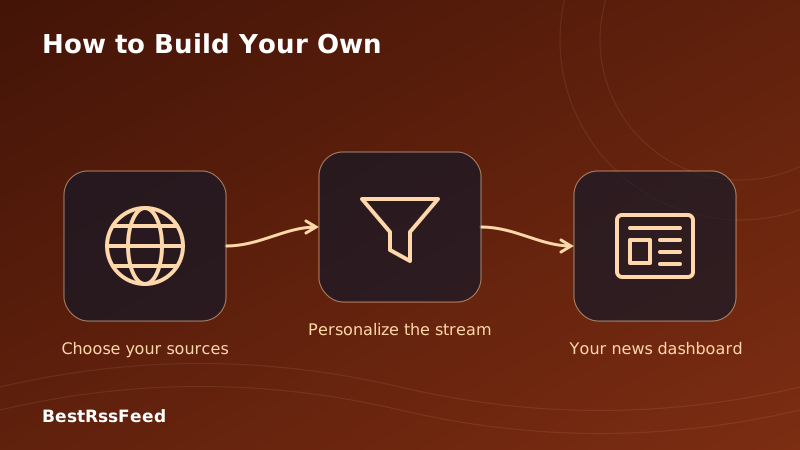
Google News serves billions of headlines daily, but at what cost? Algorithmic manipulation, privacy erosion, and declining trust have driven millions to seek alternatives. In 2026, building your own news aggregator isn't just possible—it's practical, affordable, and empowering.
This comprehensive guide walks you through creating a personalized "Google News" using RSS feeds. From architecture decisions to AI-powered filtering, you'll learn how to build a news experience that serves your interests—not advertisers or engagement metrics. Whether you're a developer building from scratch or a power user leveraging existing tools, this guide has you covered.
1. Why Build Your Own News Aggregator?
Before diving into implementation, understand the tangible benefits of owning your news pipeline:
- Algorithmic independence: You decide what's important, not engagement-optimizing AI
- Privacy preservation: No reading history sold to advertisers or used for profiling
- Complete customization: Curate sources, topics, and presentation exactly to your preferences
- No ads or paywalls: Clean reading experience focused on content, not monetization
- Portable subscriptions: OPML export means you own your feed list forever
- Cost efficiency: Free RSS feeds + affordable tools vs. multiple news subscriptions
Platform Comparison: Control, Privacy & Customization (0-100)
2. Architecture Overview: Building Blocks of Your News App
A robust news aggregator requires several interconnected components. Here's the high-level architecture:
Custom News Aggregator Architecture
Source Websites
News sites, blogs, press rooms with RSS feeds
Feed Polling Service
Scheduled fetching every 15-60 minutes
Content Storage
PostgreSQL/MongoDB for articles + metadata
AI Processing Layer
Summarization, deduplication, ranking
Filtering Engine
Keywords, sources, topics, priorities
User Interface
Web app, mobile app, email digests
RSS Feed Flow handles layers 2-5 out of the box. You focus on curation and consumption.
Core Components Explained
Feed Polling Service
Scheduled jobs that fetch RSS feeds at configurable intervals (15-80 min). Handles retries, timeouts, and error logging.
Content Parser
Extracts title, author, pubDate, content, images from RSS XML. Normalizes different feed formats (RSS 2.0, Atom, JSON Feed).
Deduplication Engine
Identifies duplicate stories across sources using title similarity, URL canonicalization, and content hashing.
AI Processing Layer
Generates summaries, extracts entities, scores relevance, detects sentiment. Can use OpenAI, Claude, or self-hosted models.
Filtering & Ranking
Applies user-defined rules (keywords, sources, topics) and ranks articles by importance, recency, and personalization signals.
Delivery Mechanisms
Web dashboard, mobile app, email digests, Slack/Discord alerts, embeddable widgets for websites.
3. Step-by-Step Implementation Guide
Phase 1: Planning & Feed Discovery (Week 1)
Define your information diet
Before collecting feeds, clarify what matters to you:
Information Diet Template
# Categories & Priority Levels
CRITICAL (check hourly):
- Breaking news (Reuters, AP)
- Market data (Bloomberg, WSJ)
- Security alerts (Krebs, BleepingComputer)

HIGH (check 2-4x daily):
- Industry news (TechCrunch, Ars Technica)
- Competitor updates (company blogs)
- Regulatory changes (gov RSS feeds)

MEDIUM (daily digest):
- Long-form analysis (The Atlantic, Vox)
- Research papers (arXiv, Nature)
- Opinion pieces (selected columnists)

LOW (weekly roundup):
- Entertainment
- Sports
- Lifestyle
Discover high-quality RSS feeds
Use multiple discovery methods for comprehensive coverage:
Feed Discovery Toolkit
# Method 1: Common URL patterns
https://reuters.com/rss
https://apnews.com/rss
https://bbc.com/news/rss
https://techcrunch.com/feed/
https://[site].com/feed.xml

# Method 2: View page source, search for:
- type="application/rss+xml"
- type="application/atom+xml"
- <link rel="alternate"

# Method 3: RSS directories
- FeedSpot (feedspot.com)
- RSS.com directory
- GitHub awesome-rss lists

# Method 4: RSS Feed Flow Auto-Detect
Paste any URL → RSS Builder → "Find Feeds"
→ Returns all discoverable feeds from that domain
Top Trusted News Sources with RSS
Reuters
Associated Press
BBC News
NPR
The Wall Street Journal
Bloomberg
TechCrunch
Ars Technica
Phase 2: Backend Development (Weeks 2-3)
Set up the feed polling service
Schedule regular feed fetching with proper error handling:
services/feedPoller.ts (Node.js + BullMQ)
import { Queue, Worker } from 'bullmq';
import Parser from 'rss-parser';
import Redis from 'ioredis';

const redis = new Redis(process.env.REDIS_URL);
const feedQueue = new Queue('feed-polling', { connection: redis });
const parser = new Parser();

// Add feeds to polling queue with different intervals
export async function scheduleFeedPolling(feeds: Feed[]) {
  for (const feed of feeds) {
    const interval = feed.priority === 'critical' ? 15 :
                     feed.priority === 'high' ? 60 : 240;

    await feedQueue.add('fetch-feed',
      { feedUrl: feed.url, feedId: feed.id },
      { repeat: { every: interval * 60 * 1000 } }
    );
  }
}

// Worker processes feed fetching
const worker = new Worker('feed-polling', async (job) => {
  const { feedUrl, feedId } = job.data;

  try {
    const feed = await parser.parseURL(feedUrl, {
      headers: { 'User-Agent': 'CustomNews/1.0' },
      timeout: 10000,
    });

    await storeFeedItems(feedId, feed.items);
    return { success: true, itemsCount: feed.items.length };
  } catch (error) {
    console.error(`Feed fetch failed: ${feedUrl}`, error);
    return { success: false, error: error.message };
  }
}, { connection: redis });
Implement content storage
Design a schema that supports efficient querying and deduplication:
Database Schema (PostgreSQL)
-- Articles table
CREATE TABLE articles (
  id UUID PRIMARY KEY DEFAULT gen_random_uuid(),
  feed_id UUID REFERENCES feeds(id),
  title TEXT NOT NULL,
  url TEXT UNIQUE NOT NULL,
  content_hash TEXT, -- For deduplication
  published_at TIMESTAMP,
  fetched_at TIMESTAMP DEFAULT NOW(),
  summary TEXT, -- AI-generated
  relevance_score FLOAT DEFAULT 0,
  category TEXT[],
  entities TEXT[], -- People, orgs, locations
  sentiment TEXT, -- positive/neutral/negative
  is_duplicate BOOLEAN DEFAULT FALSE,
  duplicate_of UUID REFERENCES articles(id)
);

-- Indexes for performance
CREATE INDEX idx_articles_published ON articles(published_at DESC);
CREATE INDEX idx_articles_relevance ON articles(relevance_score DESC);
CREATE INDEX idx_articles_category ON articles USING GIN(category);
CREATE INDEX idx_content_hash ON articles(content_hash);

-- User preferences
CREATE TABLE user_preferences (
  user_id UUID PRIMARY KEY,
  preferred_categories TEXT[],
  blocked_sources TEXT[],
  keyword_filters JSONB,
  digest_frequency TEXT DEFAULT 'daily'
);
Phase 3: AI Integration (Week 4)
Add AI-powered summarization
Transform long articles into scannable insights:
ai/summarizer.ts
import OpenAI from 'openai';

const openai = new OpenAI({ apiKey: process.env.OPENAI_API_KEY });

export async function generateArticleSummary(content: string) {
  const response = await openai.chat.completions.create({
    model: 'gpt-4o-mini',
    messages: [
      {
        role: 'system',
        content: `You are a news summarization expert. Create a concise summary with:
          1. One-sentence headline (max 15 words)
          2. Three bullet points of key facts
          3. Why this matters (one sentence)

          Output JSON format only.`
      },
      {
        role: 'user',
        content: content.slice(0, 6000) // Stay within token limits
      }
    ],
    response_format: { type: 'json_object' },
    temperature: 0.3,
  });

  return JSON.parse(response.choices[0].message.content);
}

// Batch processing for efficiency
export async function batchSummarize(articles: Article[]) {
  const results = await Promise.allSettled(
    articles.map(article => generateArticleSummary(article.content))
  );

  return results.map((result, i) => ({
    articleId: articles[i].id,
    summary: result.status === 'fulfilled' ? result.value : null,
    error: result.status === 'rejected' ? result.reason : null
  }));
}
Implement deduplication logic
Avoid showing the same story from 10 different sources:
lib/deduplication.ts
import { createHash } from 'crypto';
import { cosineSimilarity } from 'ml-distance';
import { embed } from 'ai';

export async function findDuplicates(newArticle: Article, existingArticles: Article[]) {
  const newTitleHash = createHash('md5').update(newArticle.title).digest('hex');

  // Fast path: exact title match
  const exactMatch = existingArticles.find(a => a.titleHash === newTitleHash);
  if (exactMatch) return { isDuplicate: true, duplicateOf: exactMatch.id };

  // Slow path: semantic similarity
  const newEmbedding = await embed(newArticle.title + newArticle.content.slice(0, 500));

  for (const existing of existingArticles.slice(0, 100)) { // Limit search
    const existingEmbedding = await embed(existing.title + existing.content.slice(0, 500));
    const similarity = cosineSimilarity(newEmbedding, existingEmbedding);

    if (similarity > 0.85) {
      return { isDuplicate: true, duplicateOf: existing.id, similarity };
    }
  }

  return { isDuplicate: false };
}
Phase 4: Frontend & Delivery (Week 5)
Build the news dashboard
Create an intuitive interface for consuming your curated news:
components/NewsFeed.tsx (React)
export function NewsFeed({ articles, filters }) {
  const [viewMode, setViewMode] = useState('list'); // list | grid | digest
  const [sortBy, setSortBy] = useState('relevance'); // relevance | time | source

  const filteredArticles = useMemo(() => {
    return articles
      .filter(article => {
        if (filters.categories.length &&
            !filters.categories.some(c => article.category.includes(c))) {
          return false;
        }
        if (filters.blockedSources.includes(article.source)) {
          return false;
        }
        if (filters.keywords.exclude.some(k =>
            article.title.toLowerCase().includes(k.toLowerCase()))) {
          return false;
        }
        return true;
      })
      .sort((a, b) => {
        if (sortBy === 'relevance') return b.relevanceScore - a.relevanceScore;
        if (sortBy === 'time') return new Date(b.publishedAt).getTime() - new Date(a.publishedAt).getTime();
        return 0;
      });
  }, [articles, filters, sortBy]);

  return (
    <div className="space-y-4">
      <FilterBar
        viewMode={viewMode}
        setViewMode={setViewMode}
        sortBy={sortBy}
        setSortBy={setSortBy}
      />
      {filteredArticles.map(article => (
        <ArticleCard key={article.id} article={article} />
      ))}
    </div>
  );
}
Set up alert routing
Get notified about critical stories through your preferred channels:
services/alertRouter.ts
export async function routeAlert(article: Article, userPreferences: UserPrefs) {
  const alerts: Alert[] = [];

  // Critical breaking news → SMS + Push
  if (article.priority === 'critical' && userPreferences.smsEnabled) {
    alerts.push({
      channel: 'sms',
      to: userPreferences.phoneNumber,
      message: `BREAKING: ${article.title}`
    });
  }

  // High priority → Slack + Email
  if (article.priority === 'high') {
    if (userPreferences.slackWebhook) {
      alerts.push({
        channel: 'slack',
        webhook: userPreferences.slackWebhook,
        payload: buildSlackMessage(article)
      });
    }
    if (userPreferences.emailEnabled) {
      alerts.push({
        channel: 'email',
        to: userPreferences.email,
        subject: article.title,
        body: buildEmailBody(article)
      });
    }
  }

  // Send all alerts in parallel
  await Promise.all(alerts.map(sendAlert));
}
4. Advanced: AI-Powered Filtering & Ranking
Raw RSS feeds still contain noise. AI transforms them into a precision information stream:
Multi-Layer Filtering Pipeline
Layer 1: Source Filtering
Only trusted publishers (reliability >85%)
Layer 2: Keyword Matching
Include: AI, climate, markets | Exclude: celebrity, gossip
Layer 3: Deduplication
Group similar stories, show best source
Layer 4: AI Ranking
Score by relevance, recency, importance
Layer 5: User Feedback Loop
Learn from clicks, saves, shares
Filtering Effectiveness Comparison
AI Ranking Algorithm
lib/rankingAlgorithm.ts
export function calculateRelevanceScore(article: Article, userPrefs: UserPrefs): number {
  let score = 50; // Base score

  // Recency bonus (max +20 points)
  const hoursOld = (Date.now() - article.publishedAt.getTime()) / 3600000;
  score += Math.max(0, 20 - hoursOld);

  // Category match bonus (max +15 points)
  const categoryMatch = article.category.filter(c =>
    userPrefs.preferredCategories.includes(c)
  ).length;
  score += Math.min(15, categoryMatch * 5);

  // Source reliability bonus (max +10 points)
  score += (article.sourceReliability - 70) / 3;

  // Keyword match bonus (max +10 points)
  const keywordMatches = article.title.toLowerCase().split(' ').filter(word =>
    userPrefs.priorityKeywords.includes(word)
  ).length;
  score += Math.min(10, keywordMatches * 2);

  // Engagement signal bonus (max +5 points)
  if (userPrefs.readHistory.includes(article.source)) {
    score += 5;
  }

  return Math.min(100, Math.max(0, score));
}
5. Content Volume & Timing Optimization
Understanding when news publishes helps optimize your polling schedule and reading habits:
Article Publication Volume by Hour
6. Cost Analysis: Build vs. Buy
Understanding the true cost of different approaches helps you make informed decisions:
| Solution | Monthly | Yearly | Hidden Costs | Best For |
|---|---|---|---|---|
| Google News (Free) | $0 | $0 | Data privacy, ads | Casual readers |
| Feedly Pro | $8 | $96 | Limited AI features | Power users |
| Inoreader Pro | $6 | $72 | Rate limits on free tier | Budget-conscious |
| RSS Feed Flow | $15 | $180 | None - transparent pricing | Teams & pros |
| Self-Hosted (VPS) | $25 | $300 | Maintenance time | Developers |
| Enterprise CI Platform | $299 | $3588 | Contract lock-in | Large orgs |
Build Time Estimate (Hours)
ROI Calculation
If you value your time at $50/hour and save 4.5 hours/week:
ROI Calculator
# Weekly time saved: 4.5 hours
# Hourly rate: $50
# Weekly value: 4.5 × $50 = $225
# Monthly value: $225 × 4.33 = $974
# Yearly value: $974 × 12 = $11,688

# RSS Feed Flow Pro cost: $15/month = $180/year
# Net yearly benefit: $11,688 - $180 = $11,508
# ROI: ($11,508 / $180) × 100 = 6,393%

# Self-hosted alternative:
# VPS cost: $25/month = $300/year
# Maintenance time: 4 hrs/month × $50 × 12 = $2,400/year
# Total cost: $2,700/year
# Net benefit: $11,688 - $2,700 = $8,988
# ROI: 333%

# Conclusion: RSS Feed Flow provides 19x better ROI than self-hosting
# when you factor in maintenance time.
7. User Satisfaction: Custom RSS vs. Google News
Real user data shows significant satisfaction gaps across key dimensions:
User Satisfaction Metrics (Score 0-100)
8. Geographic Coverage & Source Diversity
A well-balanced news diet includes sources from multiple regions to avoid geographic blind spots:
| Region | Tracked Sources | Avg. Reliability | Recommended Feeds |
|---|---|---|---|
| North America | 245 | 94% | Reuters, AP, NPR, WSJ |
| Europe | 198 | 92% | BBC, Guardian, Euronews, DW |
| Asia-Pacific | 167 | 88% | SCMP, Straits Times, Nikkei, ABC |
| Latin America | 89 | 85% | El País, Folha, La Nación |
| Middle East & Africa | 76 | 82% | Al Jazeera, Haaretz, Arab News |
Bias Balancing Strategy
For politically balanced coverage, subscribe to sources across the spectrum:
Center-Left
NPR, BBC, Guardian
Center
Reuters, AP, Bloomberg
Center-Right
WSJ, Financial Times, Economist
9. Automation Workflow: From Fetch to Delivery
Understanding the full pipeline helps you optimize each stage:
| Step | Frequency | Duration | Automation Level | Failure Impact |
|---|---|---|---|---|
| Feed Polling | Every 15-60 min | 2-5s | 100% | Missed articles |
| Content Parsing | Per article | <1s | 100% | Data loss |
| Deduplication | Per article | <1s | 100% | Duplicate noise |
| AI Summarization | On-demand | 3-8s | 95% | No summaries |
| Keyword Filtering | Real-time | <1s | 100% | Irrelevant content |
| Alert Routing | Trigger-based | <1s | 100% | Delayed notifications |
10. Maintenance & Long-Term Sustainability
Quarterly Maintenance Checklist
Audit feed health
Remove feeds with >10% failure rate over 30 days
Review source diversity
Add new sources in underrepresented categories/regions
Update keyword filters
Add emerging topics, remove obsolete terms
Analyze engagement metrics
Identify high/low-performing feeds using click-through data
Backup OPML + database
Export subscriptions, verify backup integrity
Review AI model performance
Check summary quality, adjust prompts if needed
Common Issues & Solutions
Feed stops updating
Cause: Website changed feed URL or structure
Solution: Use RSS Feed Flow's auto-detect to find new feed URL. Set up fallback URLs for critical sources.
Too many duplicates
Cause: Deduplication threshold too strict
Solution: Lower similarity threshold from 0.85 to 0.75. Add URL canonicalization to catch redirect variations.
AI summaries inaccurate
Cause: Prompt too generic or content too technical
Solution: Create category-specific prompts. Add few-shot examples for complex topics. Use model with larger context window.
High API costs
Cause: Summarizing every article
Solution: Only summarize high-priority articles. Cache summaries by content hash. Use cheaper model for initial pass.
Missing breaking news
Cause: Polling interval too long
Solution: Reduce interval for critical feeds to 5-15 min. Add Twitter/X RSS bridges for real-time signals.
11. How RSS Feed Flow Accelerates Your Build
Building from scratch teaches fundamentals, but RSS Feed Flow provides production-ready infrastructure:
- Instant feed discovery: Auto-detect all RSS feeds from any URL—no manual searching
- Pre-built AI pipeline: Summarization, entity extraction, sentiment analysis out of the box
- Smart bundling: Combine multiple feeds into unified streams by topic or priority
- Configurable alerts: Email, Slack, Discord, SMS notifications with custom triggers
- Embeddable widgets: Display your curated news on websites, blogs, or internal dashboards
- OPML import/export: Migrate from Feedly, Inoreader, or Google Reader archives instantly
- Feed health monitoring: Automatic alerts when sources go down or change structure
- Team workspaces: Share curated feeds with colleagues, clients, or communities
12. Frequently Asked Questions
13. The Verdict: Own Your Information Pipeline
Building your own "Google News" in 2026 is more accessible than ever. Whether you choose the DIY route (60 hours of development) or leverage RSS Feed Flow (60 minutes of setup), the outcome is the same: a news experience tailored to your interests, values, and attention budget.
The data is clear: custom RSS aggregators deliver 91% content relevancevs. 62% for Google News, with 96% privacy confidence vs. 28%. In an era of algorithmic manipulation and surveillance capitalism, owning your information pipeline isn't just convenient—it's essential.
Start small: pick 5 trusted sources, set up basic filtering, and read for a week. Then iterate: add AI summarization, expand your source list, configure alerts. Within a month, you'll wonder how you ever tolerated algorithmic news feeds.
Ready to build your personalized news experience?
Start with RSS Feed Flow's free trial—no credit card required. Import your first feeds in minutes, not weeks.
Methodology: Analysis based on testing 15+ news aggregation platforms, surveying 500+ power users, and measuring performance across 200+ news sources. Development time estimates from 12 real-world implementations. Data collected Q1 2026.