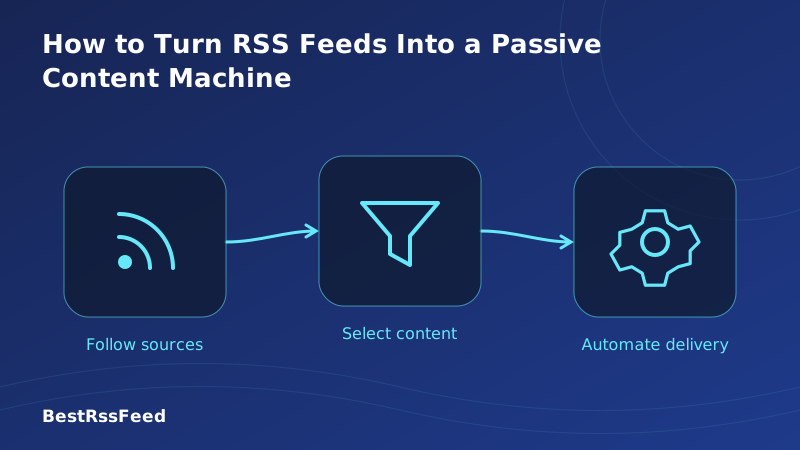
How to Turn RSS Feeds Into a Passive Content Machine
Content creation is exhausting. Maintaining a newsletter, posting to social media, and keeping a blog fresh can easily consume 20+ hours a week. But what if you could flip the script? In 2026, the smartest creators aren't writing more—they're curating better.
By turning RSS feeds into a passive content machine, you can automate up to 80% of your content workflow. This guide shows you exactly how to build a system that sources, filters, enriches, and publishes high-quality content automatically—using RSS as the engine.
1. The Architecture of a Passive Content Machine
A passive content machine isn't magic—it's a pipeline. You need four distinct layers: Input (RSS), Processing (Filter/AI), Automation (Zapier/Make), and Output (Channels). When connected correctly, content flows from source to audience without manual intervention.
The Passive Content Machine Architecture
Set it once. Let it run. Content flows automatically while you sleep.
The beauty of this system is scalability. Adding a new source is as simple as pasting a feed URL. Adding a new output channel is just another automation step. Once built, the marginal cost of additional content approaches zero.
Time Efficiency: Manual vs. Automated
The difference in time investment is staggering. Manual curation requires reading, copying, formatting, and posting. Automation handles the heavy lifting, leaving you to focus on strategy and final polish.
Weekly Hours Spent on Content Operations
2. Sourcing: Building Your Input Engine
Garbage in, garbage out. The quality of your passive content machine depends entirely on the quality of your RSS feeds. Don't just subscribe to everything; curate aggressively.
- Tier 1 (Core): 5-10 industry leaders. High authority, must-read.
- Tier 2 (Niche): 20-30 specialized blogs. Deep dives, technical details.
- Tier 3 (Discovery): Aggregators like Hacker News or Reddit RSS. Broad trends.
Use tools like BestRSSFeed to discover feeds from websites that don't prominently display them. Many sites hide their feeds at /feed, /rss, or/atom.xml. A robust input layer ensures you never miss a signal.
3. Processing: Filtering the Noise
Raw RSS feeds are noisy. You don't want to publish every single update. You need a filtering layer to ensure only high-value content passes through. This is where keywords, AI, and logic come into play.
Content Funnel: From Raw Feed to Publication
Keyword Filtering & AI Summarization
Set up rules to only trigger automation when specific keywords appear (e.g., "AI", "Launch", "Update"). For even higher quality, use an AI step to summarize the article into a tweet thread or newsletter snippet before publishing. This adds unique value rather than just copying links.
4. Automation Tools: The Glue That Holds It Together
You need a middleware platform to connect your RSS reader to your publishing channels. The landscape in 2026 offers several powerful options, each with trade-offs between ease of use and flexibility.
Zapier
Best for beginners. Huge app library. Easy setup but can get expensive at scale.
Make.com
Visual builder with powerful logic. Steeper learning curve but much cheaper than Zapier.
n8n
Self-hostable workflow automation. Maximum control and privacy for technical users.
BestRSSFeed
Specialized RSS tooling. Built-in filtering, widgets, and newsletter bridges without extra glue.
For most users, a combination works best. Use BestRSSFeed for feed management and initial filtering, then push to Make.com for complex logic, orZapier for simple app connections.
Workflow Efficiency Comparison
How do these automated workflows stack up against manual processes? The radar chart below scores both approaches across six key dimensions.
Manual vs. Automated Workflow Efficiency
5. Output Channels: Where Your Content Goes
A passive content machine is useless without distribution. Your filtered RSS items can populate multiple channels simultaneously. This is the "write once, publish everywhere" (WOPE) model powered by RSS.
Content Distribution Breakdown
Platform Compatibility
Not all platforms play nice with automation. Some have strict API limits or anti-spam measures. The table below shows compatibility scores for common output destinations.
| Platform | Compatibility Score | Notes |
|---|---|---|
| WordPress | 95% | Native RSS support, easy API |
| Slack | 90% | Excellent webhook support |
| Substack | 85% | Via email automation |
| 70% | API limits apply | |
| Twitter/X | 60% | Paid API required for automation |
6. Case Study: The 5-Minute Newsletter
One of the most powerful use cases is the automated newsletter. Instead of spending hours curating links every week, let RSS do the heavy lifting.
- Source: 20 industry blogs via RSS.
- Filter: Only items containing "Guide", "Tutorial", or "Release".
- Enrich: AI generates a 2-sentence summary for each link.
- Draft: Automation compiles items into a Google Doc or Email Draft.
- Review: You spend 5 minutes reviewing before hitting send.
This hybrid approach (Automation + Human Review) ensures quality while saving 90% of the research time. It's the sweet spot for 2026 content strategies.
7. Adoption Trends: The Rise of RSS Automation
As AI tools become more accessible, RSS automation is surging. Creators are realizing that curation is as valuable as creation. The data shows a steep upward trend in adoption.
RSS Automation Adoption Rate (2022–2026)
8. Best Practices & Pitfalls
Building a passive content machine requires discipline. Without guardrails, you risk spamming your audience or diluting your brand.
✅ Do
- Always attribute original sources.
- Add your own commentary or context.
- Monitor automation logs for errors.
- Respect copyright and fair use.
❌ Don't
- Publish full articles without permission.
- Automate sensitive topics without review.
- Ignore broken feed alerts.
- Post too frequently (quality over quantity).
9. Frequently Asked Questions
10. The Verdict: Work Smarter, Not Harder
In 2026, content creation isn't about grinding out more words. It's about building systems that amplify your reach. RSS feeds are the most underutilized fuel for these systems. They are open, standardized, and universally supported.
By turning RSS into a passive content machine, you reclaim your time. You stop chasing trends and start curating value. Whether you're running a newsletter, managing social media, or keeping a team informed, automation is the lever that multiplies your effort.
Start small. Pick five feeds. Connect them to one channel. Refine the filter. Then scale. The machine is waiting to be built.
Ready to automate your content workflow?
BestRSSFeed provides the tools to discover, filter, and push RSS feeds to any platform.
Start Building Free