RSS Feed Parsing Explained for Developersin 2026
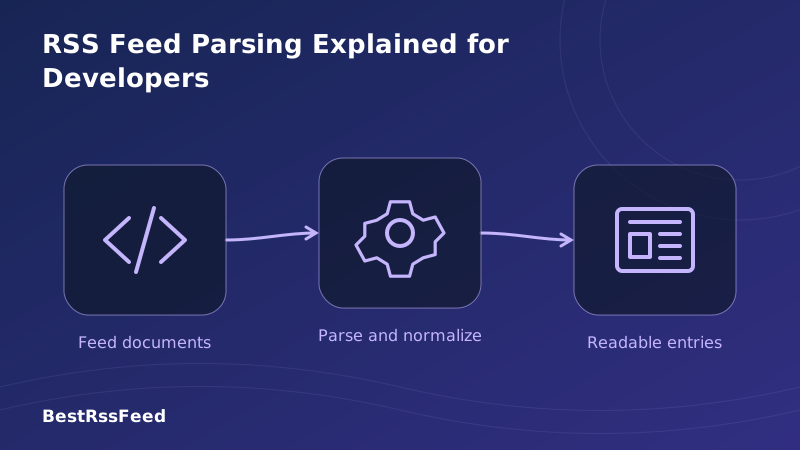
For developers building aggregators, news readers, or monitoring tools, RSS parsing is a fundamental skill. Despite being over two decades old, RSS remains the most reliable protocol for content syndication.
However, parsing isn't just about reading XML. It's about handling inconsistent standards, encoding issues, namespaces, and security vulnerabilities. This guide breaks down the engineering challenges of RSS parsing in 2026.
1. The Anatomy of an RSS Feed
Before writing code, you must understand the structure. While RSS 2.0 is the most common, you will encounter Atom and JSON Feed. Here's a minimal RSS 2.0 structure:
<?xml version="1.0" encoding="UTF-8"?>
<rss version="2.0">
  <channel>
    <title>Tech News</title>
    <link>https://example.com</link>
    <description>Latest tech updates</description>
    <item>
      <title>New Framework Released</title>
      <link>https://example.com/post/1</link>
      <guid isPermaLink="true">https://example.com/post/1</guid>
      <pubDate>Mon, 01 Jan 2026 12:00:00 GMT</pubDate>
      <description>Summary of the post...</description>
    </item>
  </channel>
</rss>
Key elements to extract include <title>, <link>,<guid> (unique ID), and <pubDate>. However, real-world feeds often include namespaces like media:contentfor images or content:encoded for full HTML bodies.
2. Parsing Strategies: Server vs. Client
One of the first architectural decisions is where to parse.
Client-Side Parsing (Not Recommended)
Fetching RSS directly from a browser via JavaScript often triggers CORS (Cross-Origin Resource Sharing) errors. Most RSS feeds do not include the Access-Control-Allow-Origin header.
Server-Side Parsing (Best Practice)
Use a backend service or serverless function to fetch the XML. This allows you to:
- Bypass CORS restrictions.
- Cache responses to reduce load on the publisher.
- Sanitize HTML content before sending to the client.
- Handle retries and timeouts gracefully.
3. Library Ecosystem in 2026
You don't need to write a parser from scratch. The ecosystem offers robust tools for every language. The following data reflects npm download trends and community adoption for popular parsing libraries.
Popular Parsing Libraries (Relative Activity)
For Node.js developers, rss-parser is highly recommended for its promise-based API and automatic handling of common namespaces. Python developers often rely on feedparser, which is battle-tested against malformed feeds.
4. Handling Variations & Namespaces
The biggest challenge in parsing is inconsistency. One feed might put the image in <image>, another in <media:content>, and another in <content:encoded> as an <img> tag.
Normalization Strategy
Build a normalization layer that converts all inputs into a unified schema. This decouples your frontend from the quirks of individual feeds.
// Example Normalization Logic
function normalizeItem(item) {
  return {
    title: item.title,
    link: item.link,
    // Check multiple possible image fields
    image: item.enclosure?.url || item.media?.thumbnail || extractImage(item.content),
    // Standardize date to ISO 8601
    published: new Date(item.pubDate).toISOString(),
  };
}
The pie chart below shows the distribution of feed formats you'll encounter in the wild. Supporting only RSS 2.0 will miss nearly 40% of content sources.
Feed Format Distribution (2026)
5. Common Parsing Errors & Solutions
Even with good libraries, feeds break. Understanding error rates helps you build resilient retry logic.
Frequency of Parsing Errors
- Encoding Mismatch: Feeds claiming UTF-8 but sending ISO-8859-1. Solution: Use libraries that detect encoding from bytes, not headers.
- Invalid Dates: RFC 822 dates are often malformed. Solution: Use robust date parsers like
date-fnswith fallback logic. - Malformed XML: Unclosed tags. Solution: Use HTML parsers (like
html5-parser) as a fallback for broken XML.
6. Performance Optimization
Parsing XML is computationally heavier than JSON. For high-scale aggregators, optimization is critical.
Parse Time & Memory Usage Comparison
Caching Strategies
Never parse the same feed twice if the content hasn't changed. Use ETags and Last-Modified headers. If the server returns a 304 Not Modified, skip parsing entirely. This reduces CPU load by up to 90% for static feeds.
7. The Rise of JSON Feed
JSON Feed was created to solve the complexity of XML parsing. It's lighter and easier to parse in JavaScript environments. Adoption is growing steadily.
RSS vs. JSON Feed Adoption Trend
While JSON Feed is easier, RSS remains the standard. The best approach in 2026 is to support both. Detect the content type from the HTTP header (application/json vs application/xml) and route to the appropriate parser.
8. Implementation Checklist
Before deploying your parser to production, ensure you've covered these bases:
9. Frequently Asked Questions
10. The Verdict: Parse Smart, Scale Fast
RSS parsing is a solved problem, but only if you respect the quirks of the open web. By building a resilient pipeline that handles errors gracefully and caches aggressively, you can build powerful content platforms without relying on expensive APIs.
In 2026, the combination of RSS reliability and modern JSON processing power gives developers the best of both worlds. Whether you're building the next Feedly or a niche monitoring tool, mastering RSS parsing is your first step toward content sovereignty.
Building an RSS Project?
BestRSSFeed provides tools to validate, discover, and manage feeds so you can focus on building.
Explore Developer Tools