RSS Feeds vs Algorithms: Who Controls What You See Online?
In 2026, the average internet user spends over 2 hours daily on social media. But here's the unsettling truth: you aren't seeing everything you subscribed to.Behind every feed lies a black box algorithm deciding what deserves your eyes based on engagement metrics, not your intent.
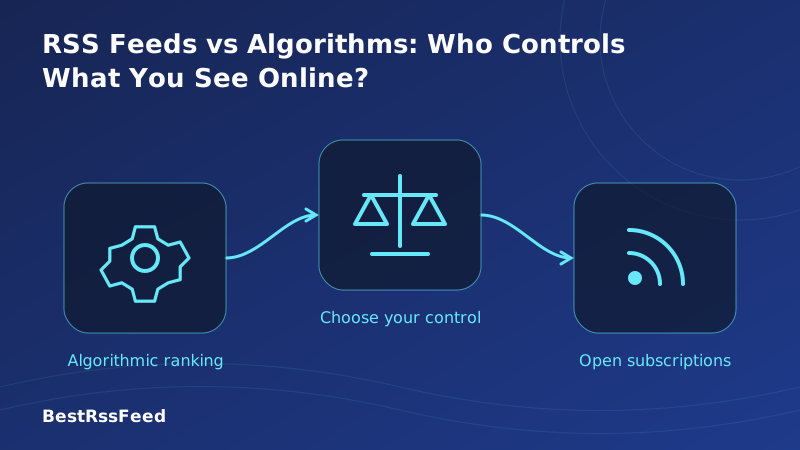
This is the core battle of the modern web: Algorithmic Feeds vs. RSS. One optimizes for platform revenue; the other optimizes for user control. Here's exactly how they differ, why it matters for your mental health and privacy, and how you can reclaim your digital autonomy.
1. The Algorithmic Takeover
In the early web, feeds were chronological. If you subscribed to a blog, you saw every post. Today, platforms like Facebook, X (Twitter), and Instagram use engagement-based ranking. This means content is filtered, sorted, and sometimes hidden based on how likely it is to keep you scrolling.
Algorithms aren't designed to inform you; they're designed to monetize your attention. If outrage keeps you on the app longer than nuance, the algorithm will show you outrage. RSS has no such incentive—it simply delivers the data.
| Model | Primary Goal | Revenue Source | User Cost |
|---|---|---|---|
| Algorithmic Feed | Maximize Time on Site | Ad Impressions | Attention & Data |
| RSS Feed | Deliver Content Efficiently | Subscription / Direct | None (Privacy) |
2. The RSS Alternative: Pull vs. Push
RSS (Really Simple Syndication) operates on a "Pull" model. You explicitly choose sources, and the reader pulls new content when you're ready. Social media operates on a "Push" model, injecting content into your stream based on predicted behavior.
Platform Trust Index (2026)
As shown above, trust in direct subscriptions (RSS/Email) vastly outperforms social platforms. When you control the feed, you trust the content. When an algorithm controls it, skepticism rises.
3. Head-to-Head: Control & Privacy
The difference isn't just philosophical; it's technical. The radar chart below scores RSS, Social Media, and Email across six critical dimensions of digital sovereignty.
RSS vs. Social vs. Email — 6-Dimension Radar
| Feature | RSS | Social | |
|---|---|---|---|
| No algorithmic filtering | ✅ | ❌ | ⚠️ |
| Zero tracking / ads | ✅ | ❌ | ❌ |
| Chronological timeline | ✅ | ❌ | ✅ |
| Works offline | ✅ | ❌ | ⚠️ |
| Own your subscription list | ✅ | ❌ | ⚠️ |
| Open standard (no lock-in) | ✅ | ❌ | ❌ |
4. The Retention Reality
Algorithms churn users. RSS builds habits. Because RSS delivers what you asked for without friction, retention rates are significantly higher. You don't unsubscribe from an RSS feed because it stopped showing you content you liked—the content is still there, you just haven't opened the reader yet.
Subscriber Retention Over 12 Months (%)
5. The Impact on Society: Echo Chambers vs. Intention
Algorithms create filter bubbles. If you click on one conspiracy theory or one political outrage, the feed floods you with similar content to maximize engagement. RSS prevents this by design. You subscribe to specific sources. If you want diverse views, you subscribe to diverse sources. The control remains with you, not a engagement optimizer.
Shadowbanning & Visibility
On social platforms, creators often complain of "shadowbanning"—where their content is technically posted but hidden from followers to test engagement. With RSS, visibility is 100% guaranteed. If you subscribe, you receive.
The Control Spectrum
6. Technical Control Comparison
Beyond philosophy, the technical implementation dictates who owns the relationship.
| Feature | Algorithmic Feed | RSS Feed |
|---|---|---|
| Content Order | Engagement-Based | Chronological |
| Visibility | Filtered (Shadowbanning) | 100% Visible |
| Data Usage | High (Tracking) | None (Direct) |
| Censorship Risk | High (Platform Rules) | Low (Direct Source) |
7. How to Reclaim Control in 2026
Switching from algorithmic dependence to RSS sovereignty doesn't happen overnight, but it starts with three key steps.
- Audit Your Inputs: Identify which news sources you actually trust, not just which ones appear on your feed.
- Find the Feed: Most blogs and news sites still have RSS links (look for the orange icon or `/feed`).
- Use a Modern Reader: Tools like BestRSSFeed bridge the gap, offering modern UI with old-school control.
Studies suggest that intentional consumption (RSS) reduces anxiety compared to reactive scrolling (Algorithms). When you finish your RSS inbox, you're done. With algorithms, there is no "end," only an infinite scroll.
8. How BestRSSFeed Bridges the Gap
We built BestRSSFeed to give you the power of RSS with the convenience of modern apps.
- No Algorithm: Your feed is strictly chronological or custom-sorted by you.
- Privacy First: We don't sell your reading habits.
- Universal Compatibility: We turn newsletters, social posts, and blogs into one unified RSS stream.
- Offline Reading: Download your content and read without tracking pixels loading.
9. Frequently Asked Questions
10. The Verdict: Choose Sovereignty
In 2026, attention is the most valuable currency you possess. Algorithmic feeds treat your attention as a resource to be mined. RSS treats your attention as a choice to be respected.
The technology exists to take back control. The question isn't whether RSS works—it's whether you're ready to stop letting a black box decide what you know.
Ready to Own Your Feed?
Join the movement of users reclaiming their information diet with BestRSSFeed.
Start Your Free Trial